Time and the speed of light are probably the two subjects in astronomy (besides quantum mechanics) that most people have a hard time understanding. I think on these two, it’s because they are very hard to visualize and understand at first. They’re not something you can easily close your eyes and picture in your mind. Hopefully we can change that now and by the end of this read you will have a better understanding of these two topics. They seem hard but like anything new, once you “get it” or start to understand it, you’ll wonder why you thought it was so hard to understand. Even though we experience both every day, time and the speed of light usually happens without us noticing or thinking about them.
So let us begin with the speed of light first if for the only reason, I just like thinking about it.
Knowing the speed of light helps us in determining the age of the universe as well as understanding the great, great distances to the stars and the galaxies in the universe. Light also, using telescopes, lets us see into the distance past and shows us what the universe looked liked billions of years ago. Yes, using light we can actually see the universe billions of years ago. light can be a time machine into the distant past.
So what is the speed of light and how fast is it? Well, lets say I have a flashlight that was the most powerful flashlight ever made and it was bright enough so that its light over time could travel through the universe. Even though according to Albert Einstein and others, traveling at the speed of light is impossible for anything with mass, let’s say we could somehow strap you onto a photon of light as it leaves the flashlight and you can hang on as it starts its journey through the universe. Now, when we talk about how fast photons of light move, there is probably nothing faster than light. Now, when I turn the flashlight on you had better hang on because in one second you will travel 186,000 miles . In one second, light travels over three quarters the distance to the moon, which is 238.900 miles away from the Earth.
To understand the distance to our moon, the Earth is 7926 miles in diameter and our moon is 238,900 away from the Earth. If we took 30 Earth’s and put them side by side, that would be how far away the moon is from us. So we now know that light travels at 186,000 miles per second and that is a distance of more than three quarters the way to the Moon. That is what is called a “light second.” The distance light travels in one second is 186,000 miles. Also in one second, light will make 60 trips between New York and Los Angeles. Being mass less, photons of light are possibly the fastest things in the universe and nothing can travel faster than light. You could not travel faster than light because if you could you would be in a time that has not yet happened. You would be ahead of time and you can’t be in a time that has not yet occurred and you would begin traveling backwards in time.
It’s a long way to travel in one second but now we’re going to go to much greater distances. After one minute hanging onto that photon of light, you will have traveled 11,160,000 miles. That’s over eleven million miles and is called a “light minute”. If you could hang on for one hour you will have traveled 669,600,000 miles, almost seven hundred million miles and a light hour. If you could hold on for a full day, 24 hours, you will have traveled 16,070,400,000 miles. That’s over sixteen billion miles. I’m not sure they call this anything but we’ll call it a light day.
Even further away is the famous “light year,” the distance light travels in one year. I’ll repeat that just in case you have to re-look at the last line. A light year is the distance light travels in one year. That distance is 5,900,000,000,000 miles. That’s right, five trillion, nine hundred billion miles that light travels in one year. It is often rounded up to 6 trillion miles in a year or that a light year equals a distance of 6 trillion miles. What’s a hundred billion when your talking about almost 6 trillion?
A light year, a light hour and a light minute are all measurements of distance rather than time although time is an equation within this distance which I will get into a little farther into this chapter.
Now when we determine the distances to the stars within our galaxy or even further to the 300 billion other galaxies in the Universe, we are talking about distances that are very, very hard to visualize and comprehend. Even trying to picture the distance to the closest star to us, Alpha Centuari, which is 4.5 light years distance from us is hard to visualize when you think that 4.5 light years is almost 25 trillion miles away from us and we kind of go, huh? Saying 26 trillion miles is not something that is easily visualized. And if we can’t visualize 25 trillion miles, how can we possibly visualize a galaxy that is 13 billion light years away. How can anyone understand these distances when you remember that one light year equals a distance of almost 6 trillion miles and you want to understand what 13 billion individual light years distance is. If you’d like to figure out the mileage, that would be 13,000,000,000 times (x) 6,000,000,000,000 (13 billion x 6 trillion). All we can ever accept or understand of a number this large is that it’s a number with a lot of zero’s. As far as how far in miles that is, yea right. It just makes it easier to understand when you hear 13 billion light years compared to eighteen million kazillion, seven hundred forty three quintillion, nine hundred million quadrillion, eighty eight trillion, four million billion, fifty nine million, thirty three thousand, six hundred and eighty eight miles away. That’s not easy to understand or say and that’s why we use light years as a measurement. We also use other measurements for larger distances such as “parsecs” which equals a distance of 3.26 light years but we’ll save those for another time and use light years here.
Now the really cool thing about looking at stars and galaxies and how many light years away they are is where “time” comes in. Time is a weird thing when it comes to the speed of light because with the speed of light, the farther something is away from us, the more time it took those photons of light traveling through the universe to reach us for us to see. The farthest galaxies we can see today, we see them after they have traveled the universe for the last 13.2 billion years (13 billion, 200 million). As these photons arrive for us to see, they carry with them a picture of their place of origin. In essence, the further light has traveled to us, the further back in time we are seeing. When we look at these 13 billion light year distant galaxies, we are seeing the light that left these galaxies 13.2 billion years ago. What we see is how these galaxies looked 13.2 billion ago, about 500 to 700 million years after the Big bang. To see where these galaxies are today, we’d have to wait about 45 billion years because today those galaxies are about that far away from us as for the last 13.2 billion years, these galaxies have been expanding with space away from us. telescopes. The only time machines around today are telescopes that let us see deep into the universe’s past.
We can actually see into the past like a time machine by looking farther and farther into the Universe. As we started out in the beginning of this chapter, when I turn the flashlight on and you hang on to that photon of light, that photon takes off and begins its journey through the Universe at a speed of 186 thousand miles a second and 6 trillion miles a year. When we look at a galaxy 13 billion light years away from us, that photon has traveled 13 billion years at the speed of 6 trillion miles a year to reach our telescope and our eyes. The same is true when we look at a star such as Sirius, a bright star located only 8 light years away or 8 x 6 trillion miles, so its light has traveled 48 trillion miles, taking 8 years to reach us. As we look at Sirius, we are seeing it as it looked 8 years ago as it took these photons of light 8 years to reach us. We are in effect looking back in time to see how Sirius looked 8 years ago.
As we look at an object in our galaxy like the Orion Nebula, which is a giant star forming gas and dust cloud containing all the elements from hydrogen to uranium, at 1600 lights years distance. We are seeing how Orion looked 1600 years ago because it took that light 1600 years to reach us. When we look out of our galaxy and look at other galaxies this lets us see even further back in time as light from other galaxies have traveled millions or billions of years to reach our telescopes. By seeing further and further into the universe, we are looking further and further back into the Universe’s 13.7 billion year past. By looking at far away galaxies, 13.2 billion light years away and then looking at closer and closer galaxies, we can watch the universe age for the last 13.2 billion years. The record of the history of the universe is before our eyes to see and decipher. With telescopes, we can watch events that happened 100’s, 1,000’s, millions and billions of years ago. Time and light hold the proof to how the universe started and evolved. The record of the history of the universe is before our eyes to see and decipher.
Since all the galaxies in the universe formed around the same time 13.2 to 13.4 billion years ago, we can look at these galaxies 13 billion light years away and see what these galaxies and the universe looked like 13 billion years ago. If we then look at galaxies whose light is 9 billion years old, we can see what the universe looked like 9 billion years ago. The same is true when we look at galaxies 8 billion light years, 7 billion light years, 5 billion light years, 1 billion light years, 900 million light years, 100 million lights years, 10 million lights years, and the Andromeda galaxy at 2.5 million light years away. By looking at different distances in the universe, we can actually look into the past and see young galaxies in the early universe still in the process of forming and we can watch closer galaxies mature from light that has traveled less than 13.2 billion light years. Now, we can say time machines really do exist and they are called telescopes.
In our everyday life, photons traveling the speed of light happens every time we look at something but it happens so fast we can’t notice its workings. Even when we look at something far away, say looking from shore at a ship that is about to drop under the horizon. If you were talking to someone manning a spotlight on the ship and you both counted from 3 to 0 and then your covert on the ship turns on the spotlight, it would appear to you on land, that the light was turned on exactly when your counterpart said he turned the light on. Light travels that fast and from our vantage of looking at distances from different points on Earth, everything we look at on Earth is too close and light is too quick to reach us from where it came that light seems to be instantaneous. when it is turned on, we see it immediately from any distance on Earth. But light is not instantaneous. Light has to leave what we are looking at and then travel to our eyes for us to see it. Light travels so fast that from any distance we can see on the Earth, light travels to it in trillionths of a second which happens so fast we can’t notice the time it took to travel. When you remember that light travels three quarters the way to the Moon in one second or would go around the Earth seven and a half times in one second, any distance we have on our 7926 mile diameter planet is covered quickly by light traveling at 186,000 miles per second.
Light travels so fast we can’t notice it in our everyday lives. It’s when we start looking at great distances out into our solar system and galaxy and other galaxies that we begin to see the affects of lights speed. Our star the Sun, is 93 million miles away from us. It takes light 8 minutes to travel from the Sun to our Earth. The Sun is 8 light minutes away from us. 8 light minutes equals about 93 million miles. We see the Sun as it was eight minutes ago as it took that light 8 minutes to travel from the Sun to the Earth. The deeper we pier into space, the farther back in time we see. That’s why I enjoy thinking about it, light is a time machine that allows us to seen the past. If light was instantaneous and we saw everything in the universe as it happens, we would never be able see into the past which would mean it would be much harder, if not impossible to understand the history of our universe.
Time Dilation --- traveling close to the speed of light
This is where you have to expand your thinking somewhat. When it comes to the effects of traveling close to the speed of light, it sometimes appears to be mind-boggling when you hear some of the theories that talk about time travel and traveling the great, great distances to the stars in our galaxy and even more so to the other galaxies in the universe. The effects it has on the space travelers and to the people watching them on their home planet is something out of a science fiction novel. It is also true.
I’m going to try and make this as simple as possible because this can make you question what is and isn’t reality. I would guess with the speed of light, it’s a subject most have a hard time understanding because it is out there and it’s sometimes hard just to get your brain to go there, to be able to picture what these theories are implying. These are almost like brain exercises as you try to picture their concepts. It sometimes just leaves you saying, huh? Go back and read the paragraph again if you have to. Once you get it, you’ll find this isn’t all that hard to understand and the next thing will be a little easier until everything will start making sense. There’s one thing about the universe, it follows a strict set of rules, the “rules of nature” if you will. Something happens in our universe because something else happened to make that something happen. Got that? But it’s true. The universe is the way it is today because of all the different things that happened since the Big Bang roughly 14 billion years ago leading up to today. Everything happens because it had to happen.
I’ll begin with part of Einstein’s “Theory of Relativity.” One of the things this theory states is that “time” is relative to ones motion and also to the amount of gravity exerted on one. This is the theory everyone has heard. It says that the faster you travel, the more time slows for the traveler. This is true but only a part of the story. What does this mean? Let me give you an example. This is slightly different than the original but it represents a good example of two people seeing the same thing but with two different perspectives to what each is seeing. It was written by Steven Hawkings in his book “ A Briefer history of Time.” It is a great analogy of where your thinking has to go to understand what I’ll be talking about in a few paragraphs so I’ll use it again and thank the original writer for this and all his great work.
It begins, there are two people. One (Bill), is standing on the platform of a railroad station waiting for the train to pull in. The other, Mary, is on a train coming towards the train station. The only thing abnormal about this scene is that the train on one side, the side facing the platform, is missing its side but only to anyone on the outside of the train. People on the outside of the train can see into one side of the train because that one side seems to be missing its wall, but if you’re inside the train it seems like the wall is there and you can’t see outside. I know it sounds weird but just follow me because we need it to be that way but it doesn’t have much to do with what we’ll be talking about. So again Bill on the platform can see into the train but Mary inside the train cannot see out. That’s easy enough. Now inside the train, Mary is sitting on a chair in the center of the train, against the wall on the side opposite of the train platform where Bill is standing and she is facing the platform side. As she sits, Mary is watching two people play ping pong on a table in the center of the train car. Looking at the train the player towards the back of the train is about to serve the ball towards his opponent on the side of the table towards the front of the train. He is serving in the direction the train is moving. At the same time he makes his first serve, the train is passing the train station platform. The train is moving at a speed of 90 miles an hour and traveling past the train station going to the next station.
Now as the train passes Bill on the platform, his eye catches the ping pong game so both he and Mary are watching the player make his first serve. Here comes the strange part of who, what, where and when. When the player hits the ball, the ball will be moving 10 miles an hour in the direction the train is moving. As Mary watches the player hit the ball, she sees the ball move towards his opponent at a speed of 10 miles an hour. Because Mary is traveling inside the train at the trains speed, she sees the ball hit and move at 10 miles an hour. As Bill watches standing on the platform, the train is wizzing by him at 90 miles an hour. When the ball is hit he sees the ball move at 100 miles an hour because he not only sees the ball move at 10 miles an hour, he also sees the train moving at 90 miles an hour so it appears to him that the ball is traveling 100 miles an hour. Which one is right, Mary who sees the ball move at 10 miles an hour or Bill who sees the ball move at 100 miles an hour. The answer is, they are both right. How can that be you ask? Good question.
The answer is relativity. What they see is relative to where they are. Mary sitting inside, is moving at the speed of the train but can’t see outside and doesn’t perceive the movement of the train so for her the only thing she sees moving is the ball that when hit moves at 10 miles an hour. For Bill, he has a different perspective as he sees the surroundings and sees the movement of the train with the movement of the ball. For Bill, the ball is moving much faster than it is for Mary.
That difference between what Mary sees and what Bill sees, is where you have to take your thought processes for the next few paragraphs as I explain Relativity as it comes to two and more different perspectives. These are good brain exercises because some of the theories on time travel are pretty far out there, almost like watching a script out of “The Twilight Zone.” Some seem like they must be complete fantasy but when you start to understand how our Universe works, you begin to understand the possibilities of some of the weirdest things you could only understand in some nightmarish dream. Whether it’s possible to pull any of these things off is another story because the technology even if possible is way beyond our capabilities with the still young technology we have today. Even though according the Einstein, we can never travel the exact speed of light, science says it should be possible to travel close to it, even 99% of it, just not “the speed of light.” The question is, is it really possible with all the pressures of traveling through space on a ship for us to ever make a ship that we can survive on traveling at the speeds we are talking about. Physics tells us that yes it is possible but is it really possible to make it happen? We won’t know until our technology catches up to our ideas. It still is fun to think about regardless but it’s even more important for us to try and find if it is possible. Maybe the goal, if there is other intelligent life in the Universe is, the first one to the edge of the Universe wins.
Time Travel
So if you have your mind open, let’s talk about time travel.
Using speed to time travel
As with the story with the train, we’re going to use Bill and Mary again. They are on break from school and trying to earn some money to pay off a few debts. Bill chooses to stay here on the Earth while Mary, ever the explorer, jumps at the chance to fly into space, into the galaxy and into the Universe.
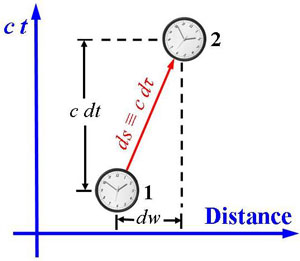
Traveling at speeds close to the speed of light has a great effect for the travelers. You have probably heard or read that at these speeds, time slows down so much for the traveler that when the travelers return back to planet Earth, all their friends and everyone they knew are now dead as many years have passed on Earth since they first took off on their journey. This sounds like some wild science fiction movie but it is also true. For the travelers, with their ship traveling at speeds close to the speed of light, time had slowed for them according to the clocks of the people who kept track of the ship on Earth. The travelers, according to the people on the Earth, had been on their journey for a thousand years. For the travelers, the trip seemed like they were gone a couple years.
At this point, remember back to how the speed of the ping pong ball on the train was determined by what was relevant to the person looking at it. The same is true for time. Time always seems to be passing at the same rate for everyone everywhere. It’s when you compare time to two or more perspectives that you see that time from different perspectives is different. I know if you started not knowing what I am talking about, this last sentence didn’t help you much so I’ll explain it a different way which may be better. I mean this is pretty cool stuff to think about when you do get it.
Let’s go back to Bill and Mary. Bill and Mary synchronize their watches and then Mary takes off in her space ship and she travels at 99% the speed of light which is 669,600,000 miles an hour. Now for both Bill and Mary, time will seem to be passing at the same rate to each of them. Another way to put it is, let’s say that Mary and Bill are both 30 years old and we know that they are both going to pass away when they are 100 years old. If Bill spent the rest of his life on the Earth, the next 70 years would seem like 70 years to him, right? If Mary spent the rest of her life on her ship traveling close to the speed of light, the next 70 years would also to her seem like 70 years. Remember, time is relative to ones perspective. It’s when Bill and Mary meet again and they compare their watches that time dilation will show its face. In reality, thousands of years would pass between what Bill saw as 70 years and what Mary saw as 70 years.
If Mary was traveling close to the speed of light and she traveled for one year according to her watch before returning to Earth, she would return to find that close to 20 years had passed on Earth. Also, Bill was no longer waiting for her. Relative to Mary, time had passed one year. It just took longer for that year to pass for Mary in her ship than it did for Bill on Earth. Even though 20 years had passed on Earth, for Mary in her ship, she saw only one year had passed because she was traveling much faster than Bill on Earth and time slowed down for her and time passed at a slower rate than it did for Bill. Time seems like it’s passing at the same rate for everyone, everywhere but it’s not. Time itself is an illusion.
Now for the generations who after Bill was long gone, kept an eye on Mary’s space ship for the 20 years she was gone, it would appear to them on Earth that Mary has been alive for 20 years but that is not true because time is relative. To Mary, she feels like she’s a year older than when she left. Because Mary was traveling close to the speed of light, time was moving slower.
Remember that for those photons of light traveling the speed of light, time stands still. If you think that, if that is the case that time stands still, if you start to slow down from the speed of light, time will begin to move forward again. The tricky thing here is to know that as you keep slowing down, getting farther from the speed of light, time itself begins to move faster. The slower you get, the more time speeds up. It’s the same as with gravity. The closer you are to a gravity force the more time slows down and the further you get from a gravity source the more time speeds up. Someone living on the top of a mountain would age faster than someone living at the base of the mountain, even though the time would be minisule. You don’t feel it because time is relative. Time feels the same to everyone everywhere, just as it is passing to you as you read this. Time feels like it’s passing at the same rate at every speed. We know that it is not. If Mary on her ship looks at her watch at 5 minute intervals, it will appear that 5 minutes has passed. If Bill on Earth looks at his watch at 5 minute intervals it will also appear to him that 5 minutes has passed. Time is relative to everyone everywhere and seems to pass at the same rate. In reality, those 5 minutes for Bill and Mary passed at vastly different speeds.
Just for the imagination now, what would happen if you went faster than the speed of light? If time moves slower the closer you get to the speed of light and stands still at the speed of light, theorists tell us that if you went faster than the speed of light, time would go in reverse and that makes sense. We don’t know of anything with mass that travels above the speed of light or that it’s even possible. We can only make educated guesses at this point. The possibilities are there that it could be true. It is also just as possible that those who say nothing can travel faster than light are right. That’s really a question hopefully future generations will be able answer.
I hope this chapter has helped you in understanding how light travels, the speed of light and time dilation. When you start thinking of the possibilities, it is fun to take your mind there.
How time passes at different rates depends on ones speed relative to the speed of light. If you traveled at the speed of light, time would stand still, frozen in time. As you start to slow down, time would begin moving again. The tricky part here is, as you leave the speed of light where time is frozen, when you start to slow down, time begins to move forward again and the slower you get from the speed of light, the more time itself begins to move faster. When you move faster, closer to the speed light, time itself passes slower. When you move slower, away from the speed of light, time itself passes quicker. Remember that for any observer located at any point along the time-line, light is always moving away from the observer at 186,000 miles per second and time always appears to be passing at the same rate for any observer, just as time is passing for you. Look up,
Rick Costello